PCB and SMT Electronics Cleanroom
Related Products
Product Description
Electronics Cleanroom Project for PCB & SMT Manufacturing
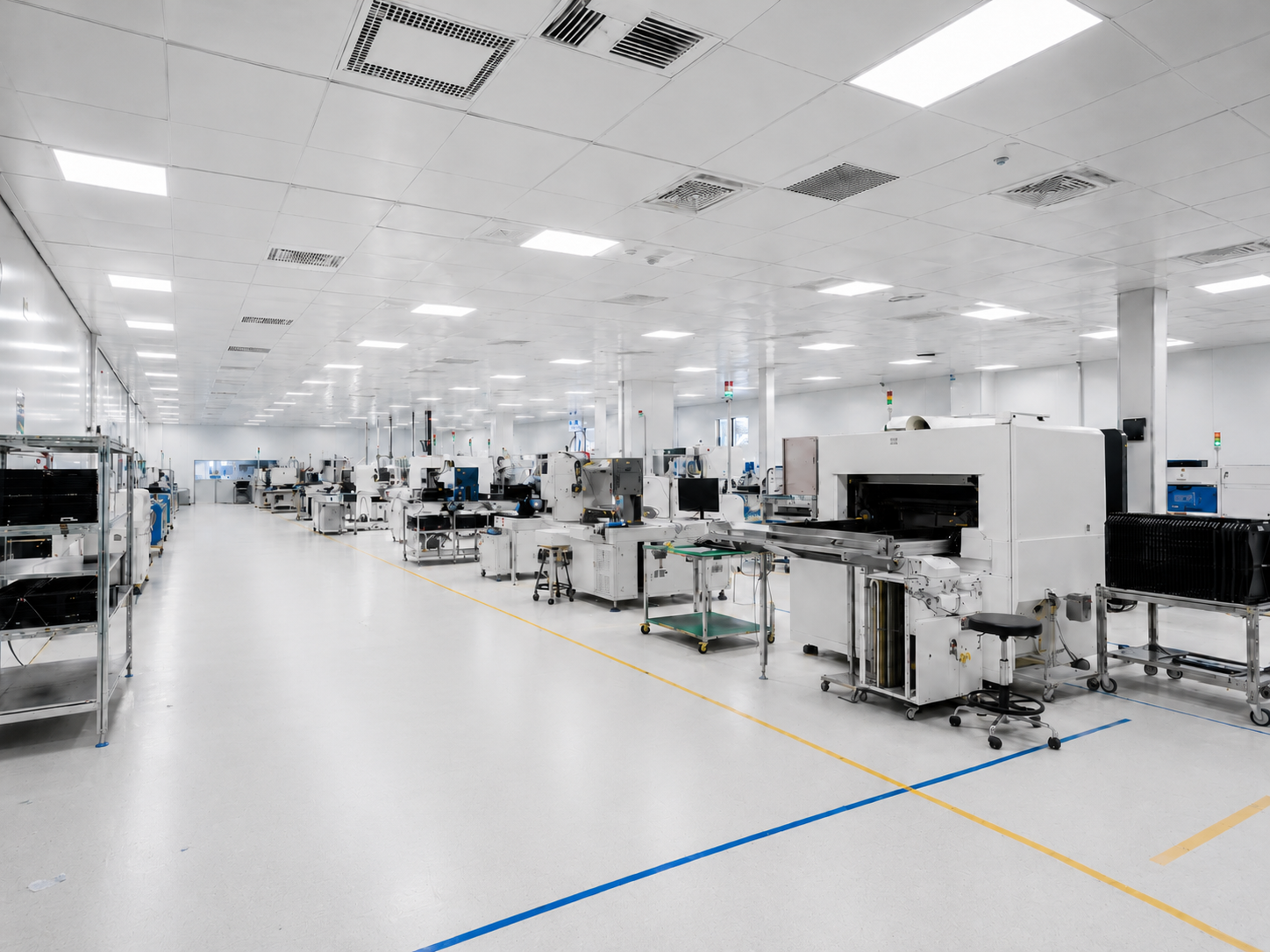
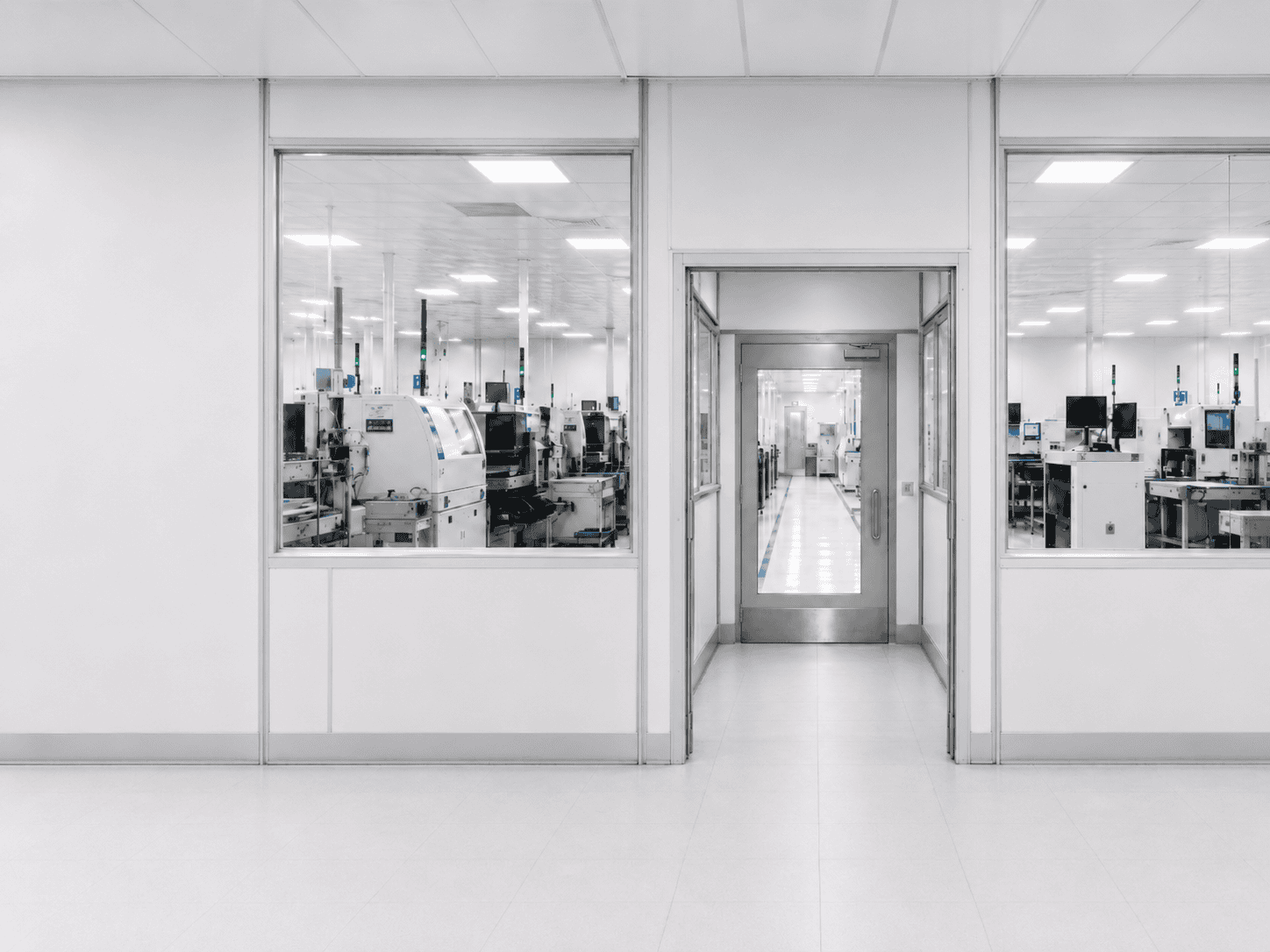
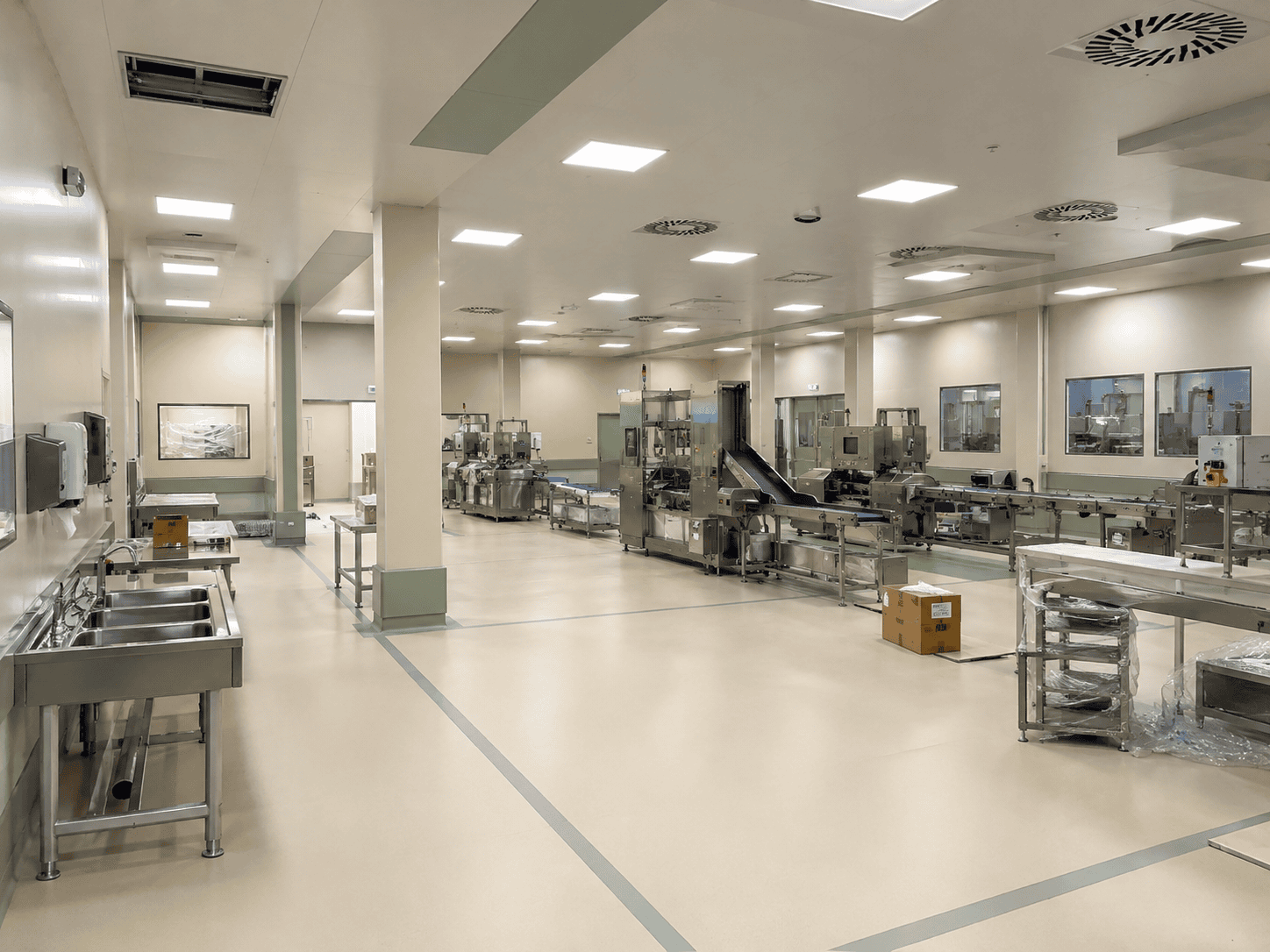
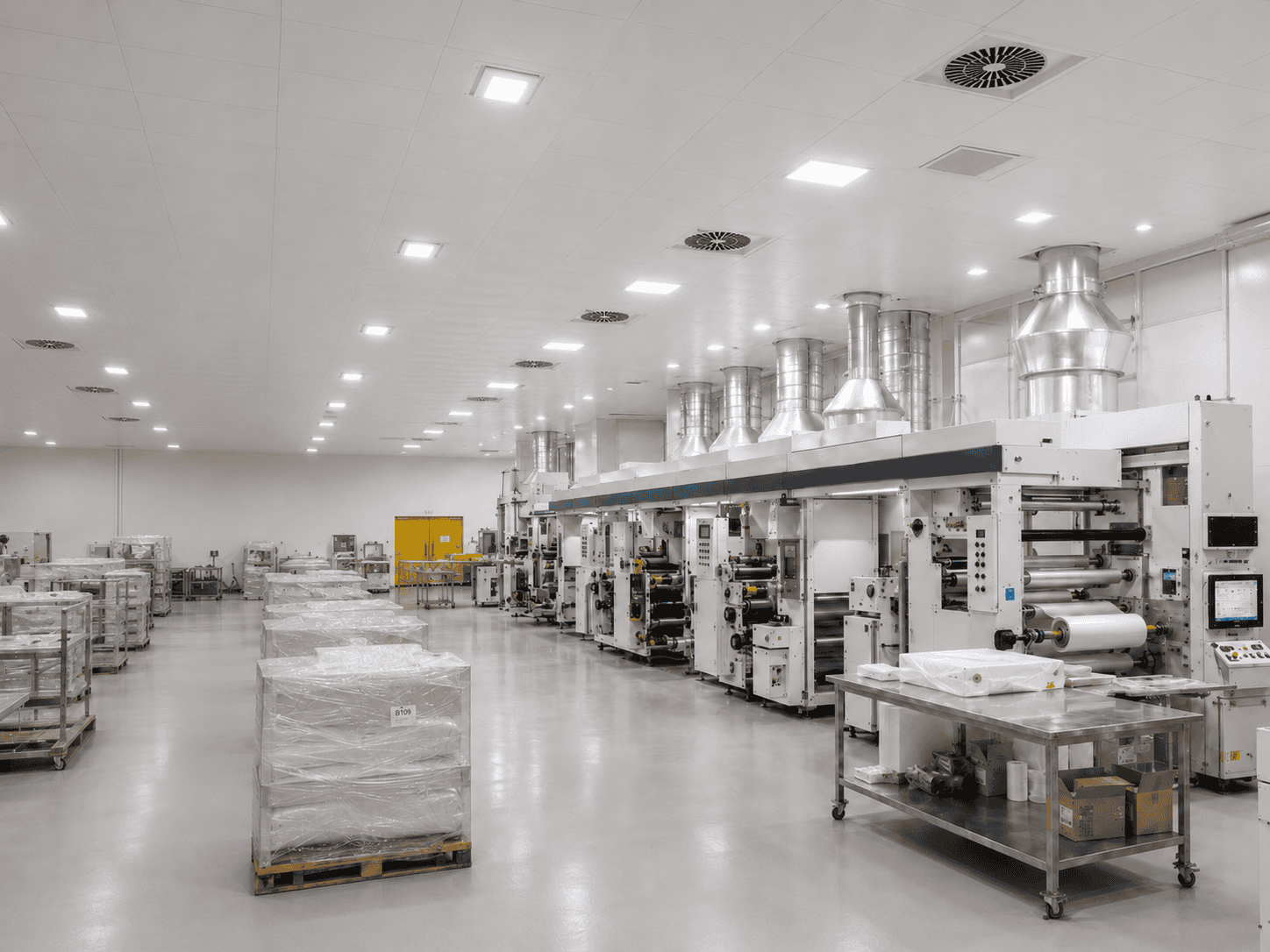
This electronics cleanroom project was designed for a precision electronics manufacturer focused on PCB assembly, SMT production, electronic component testing, and high-yield manufacturing. The client needed a controlled production environment to reduce particle contamination, improve process stability, support ESD control, and create a cleaner workflow for sensitive electronic products.
STJH Cleanroom provided a complete cleanroom solution covering layout design, cleanroom enclosure, HVAC airflow planning, HEPA filtration, temperature and humidity control, pressure zoning, ESD protection, air shower entry, pass box transfer, lighting, utility coordination, and environmental monitoring. The project was planned as a practical production cleanroom, not just a display room, with the layout built around real equipment, operator movement, maintenance access, and future production expansion.
Project Overview
| Project Type | Electronics Manufacturing Cleanroom Project |
|---|---|
| Country / Region | Vietnam |
| Industry | PCB Assembly, SMT Production, Precision Electronics Manufacturing |
| Cleanroom Area | Approximately 1,200㎡ |
| Cleanliness Class | ISO 7 main production area, ISO 8 auxiliary area |
| Application | PCB assembly, SMT line production, component testing, inspection, packaging, and material transfer |
| Project Duration | 45 days from material preparation to installation completion |
| Cleanroom Structure | Sandwich panel wall system, cleanroom ceiling system, observation windows, cleanroom doors, sealed joints, and easy-clean surfaces |
| Air Filtration System | HEPA filtration system with FFU / ceiling air supply layout and return air design |
| Temperature & Humidity Control | Designed for stable temperature and humidity control to support electronic assembly and testing stability |
| ESD Control | ESD-safe flooring, grounding points, anti-static workstations, and controlled handling zones |
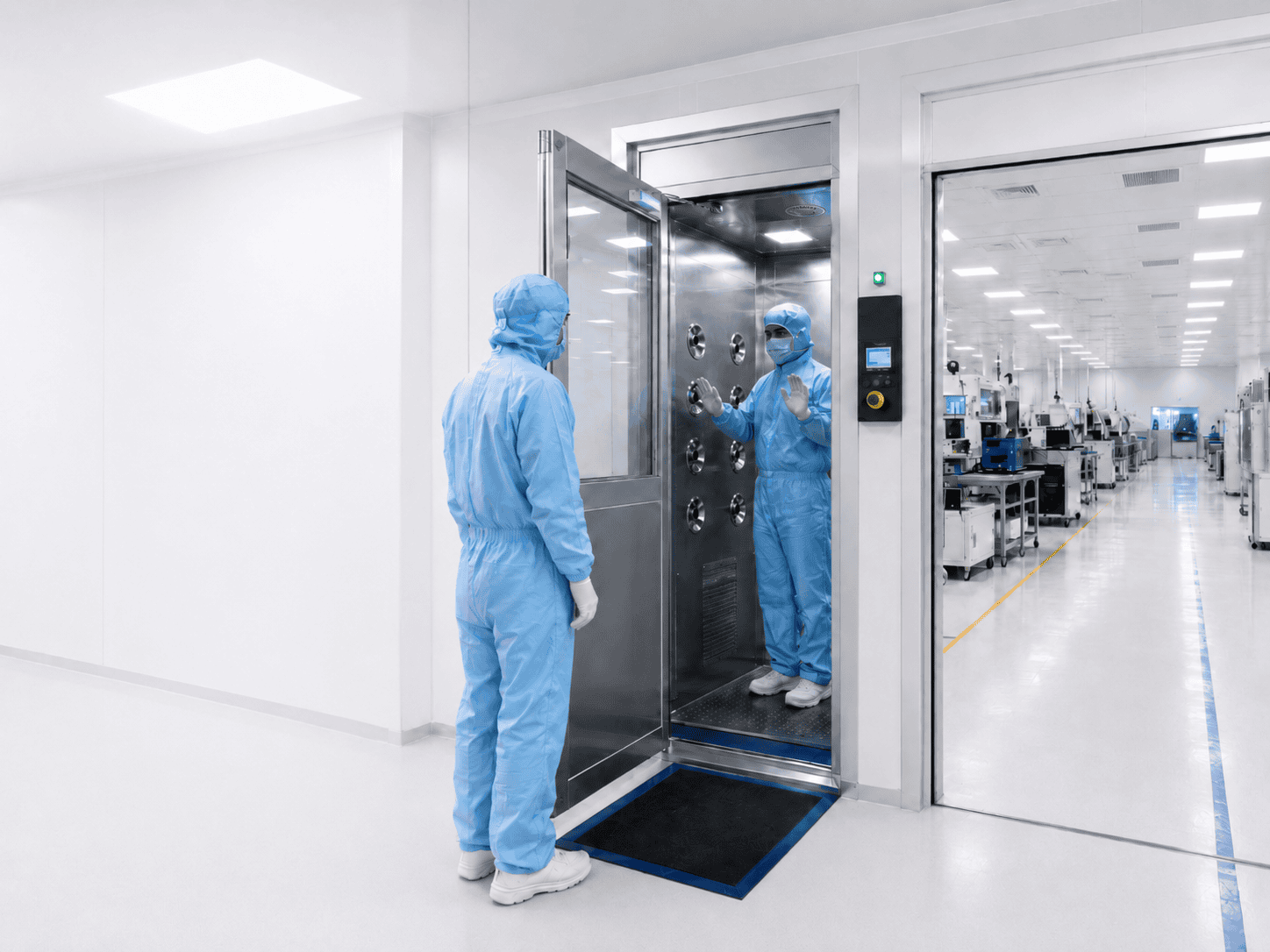
| Personnel Entry | Air shower system, gowning area, cleanroom entry control, and personnel flow planning |
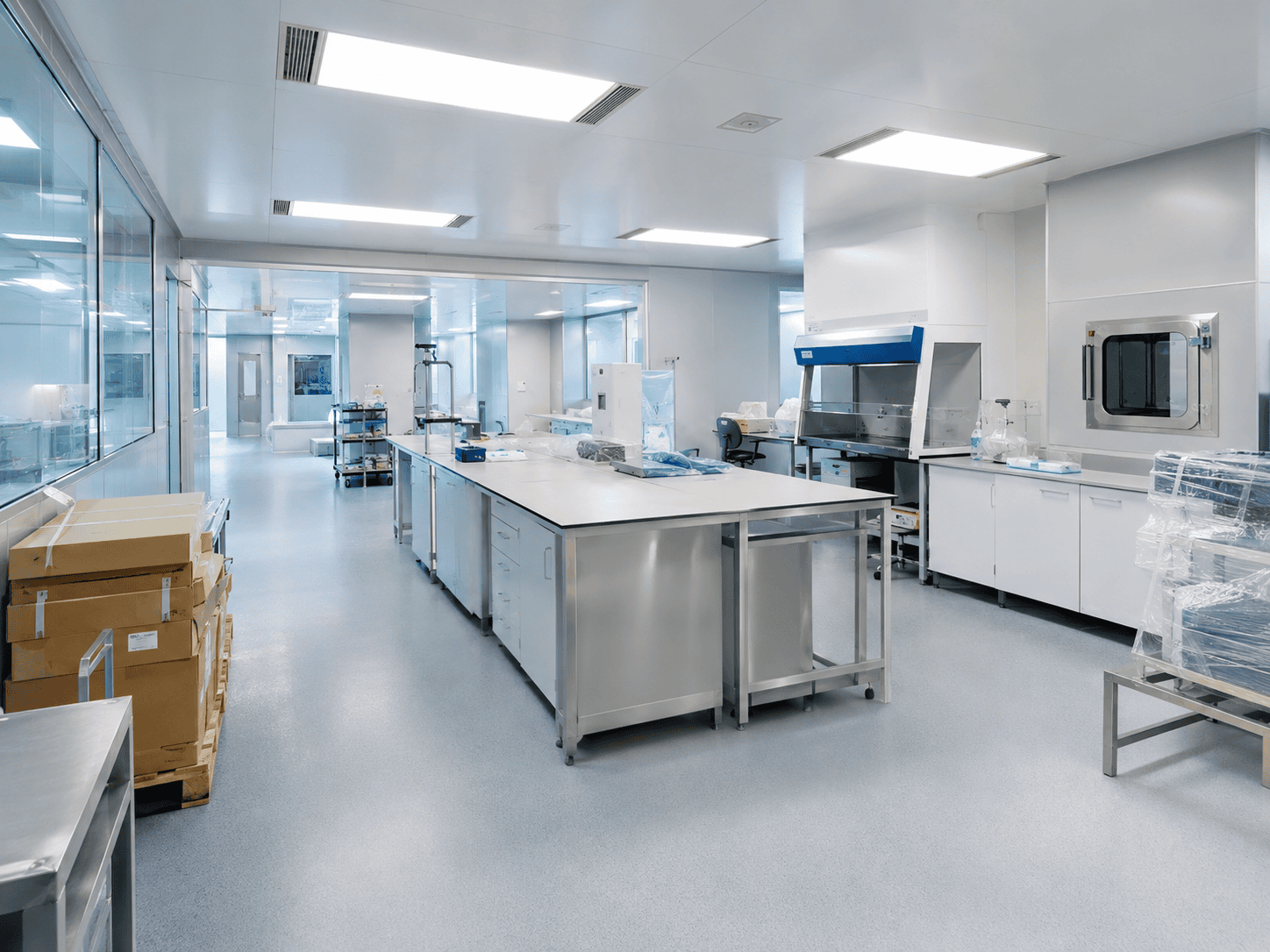
| Material Transfer | Interlocked pass box system for cleaner material transfer between different areas |
| Monitoring System | Real-time monitoring for temperature, humidity, differential pressure, and operating status |
| Key Equipment | Cleanroom panels, cleanroom doors, observation windows, FFU units, HEPA filters, air shower, pass box, return air grilles, LED lighting, and monitoring devices |
| Project Goal | Improve production yield, reduce particle contamination, strengthen ESD protection, stabilize the manufacturing environment, and support long-term clean production |
Client Challenges
Before building the electronics cleanroom, the client faced several common production challenges. Dust particles, unstable airflow, uncontrolled temperature and humidity, and electrostatic discharge all created hidden risks during PCB assembly and electronic component production. Even small environmental changes could affect soldering quality, product consistency, testing results, and final yield.
Particle contamination: Dust and airborne particles could affect PCB assembly, component placement, inspection accuracy, and product reliability.
ESD risk: Electrostatic discharge could damage sensitive electronic components and create hidden quality problems that are difficult to detect immediately.
Unstable temperature and humidity: Environmental fluctuation could influence soldering, material storage, adhesive performance, and process consistency.
Poor airflow organization: Without a properly designed airflow system, particles may settle on products or move into critical production areas.
Cross-contamination: Frequent personnel movement and material transfer could introduce dust into controlled production zones.
Layout conflicts: Cleanroom design needed to match SMT lines, testing equipment, carts, operators, maintenance routes, and utility connections.
Cleanroom Solution
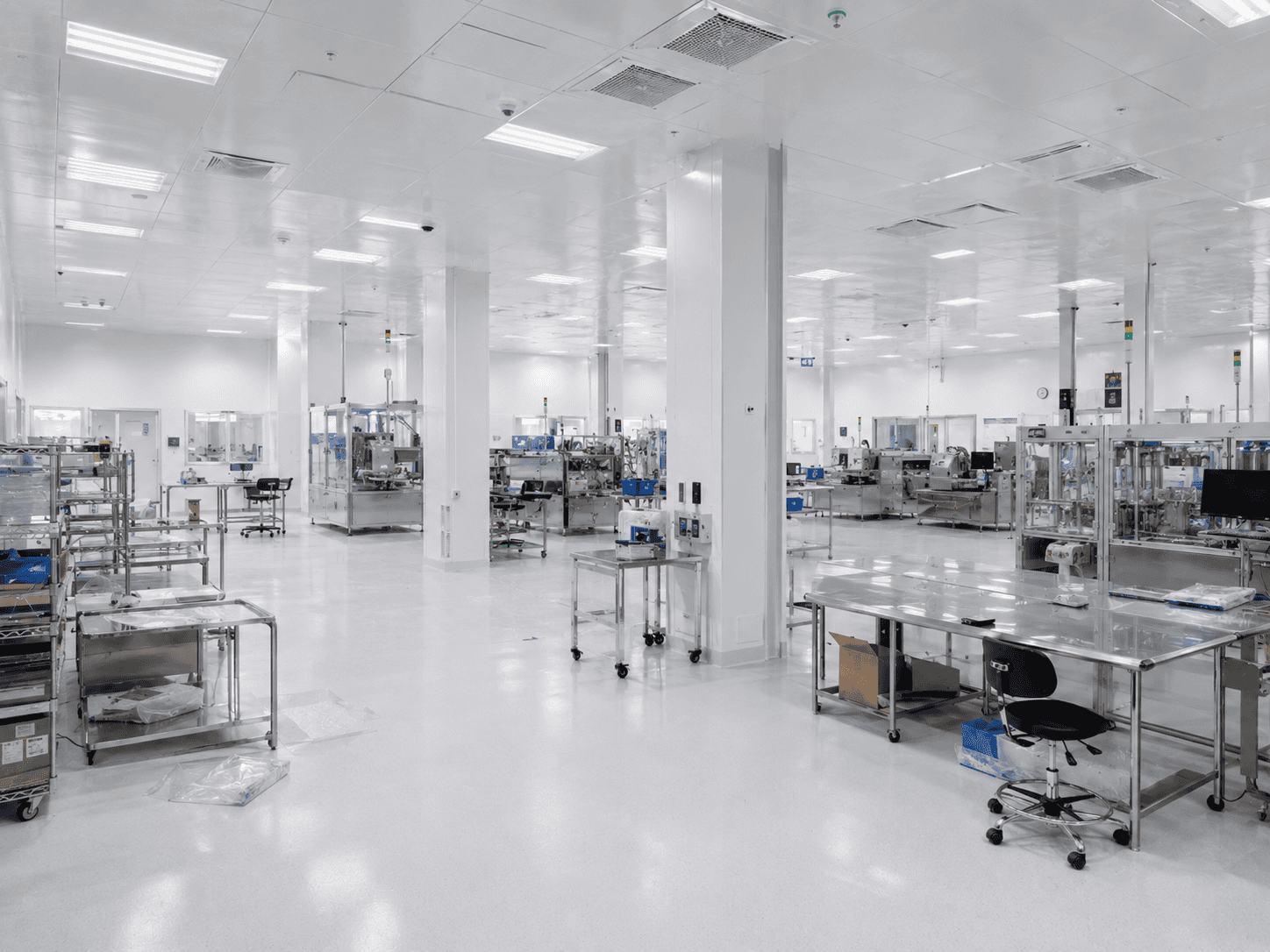
STJH Cleanroom designed the project based on the client’s production process, equipment layout, cleanroom classification requirements, and future expansion plan. The cleanroom was divided into production areas, support areas, entry areas, material transfer zones, and equipment service areas. This helped the client create a cleaner workflow while reducing unnecessary movement and contamination risk.
The project used a complete cleanroom system including HEPA filtration, ceiling air supply, return air design, ESD flooring, air shower entry, pass box transfer, environmental monitoring, and coordinated utility planning. The design focused on both cleanliness and production efficiency, helping the client improve daily operation instead of simply building a clean-looking room.
Key Cleanroom Systems
1. Airflow & HEPA Filtration System
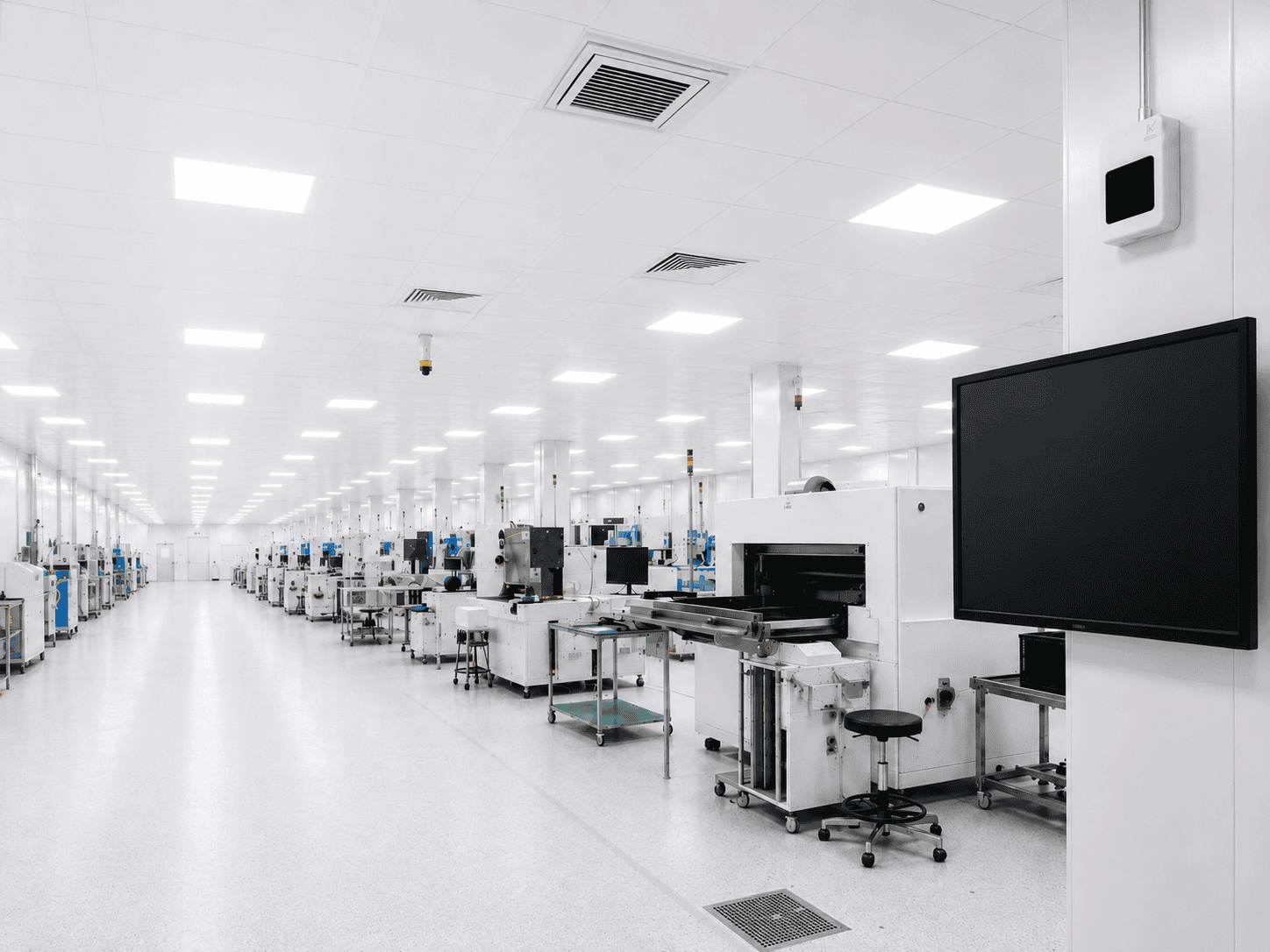
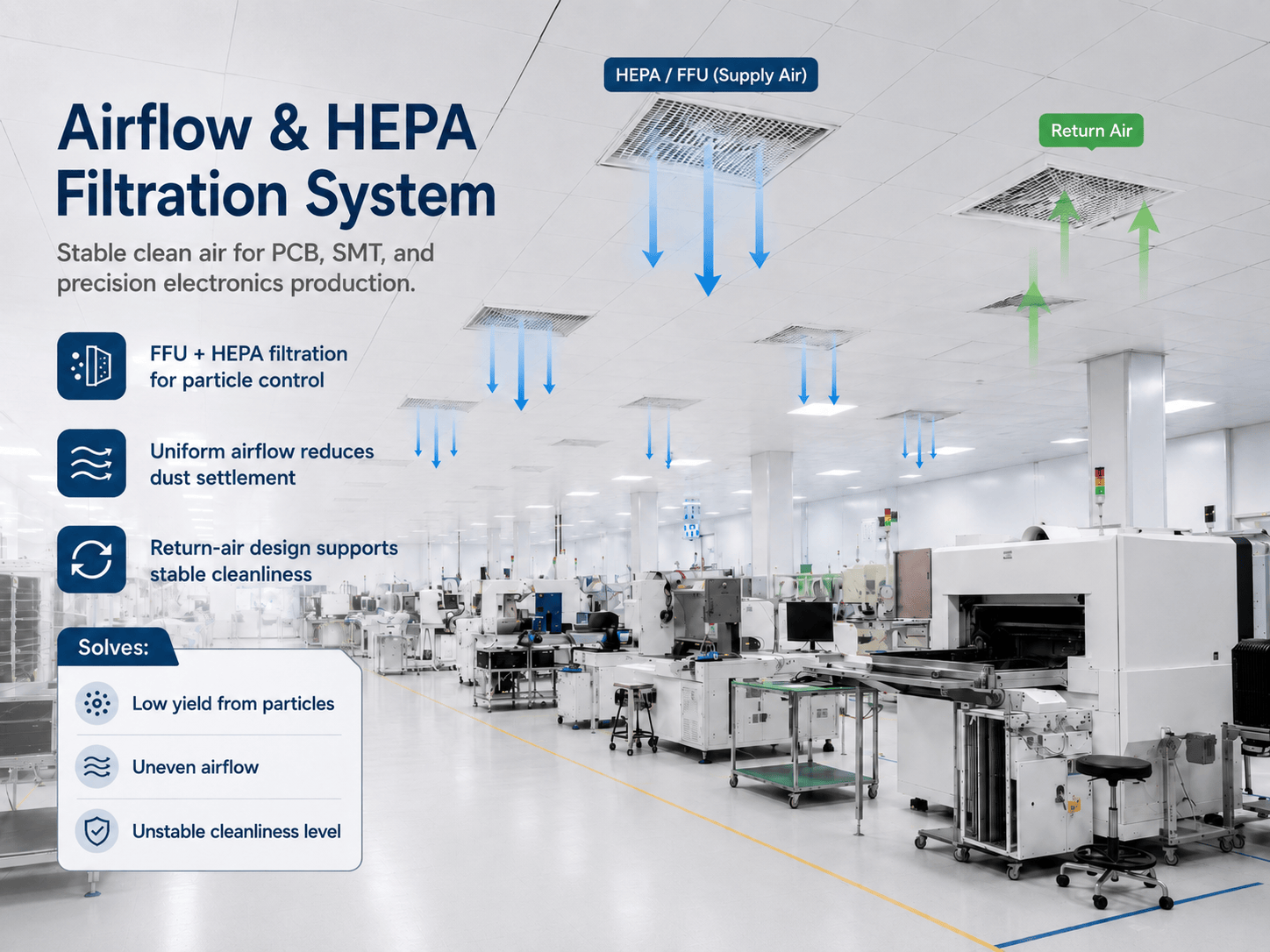
The cleanroom uses a HEPA filtration and ceiling air supply system to reduce airborne particles and maintain stable cleanliness in the production area. The airflow design helps reduce dust settlement on PCBs, electronic components, workstations, and production equipment.
HEPA filtration for particle control
Stable air supply layout
Return air system for airflow balance
Cleaner production zones for sensitive electronics
2. ESD Protection System
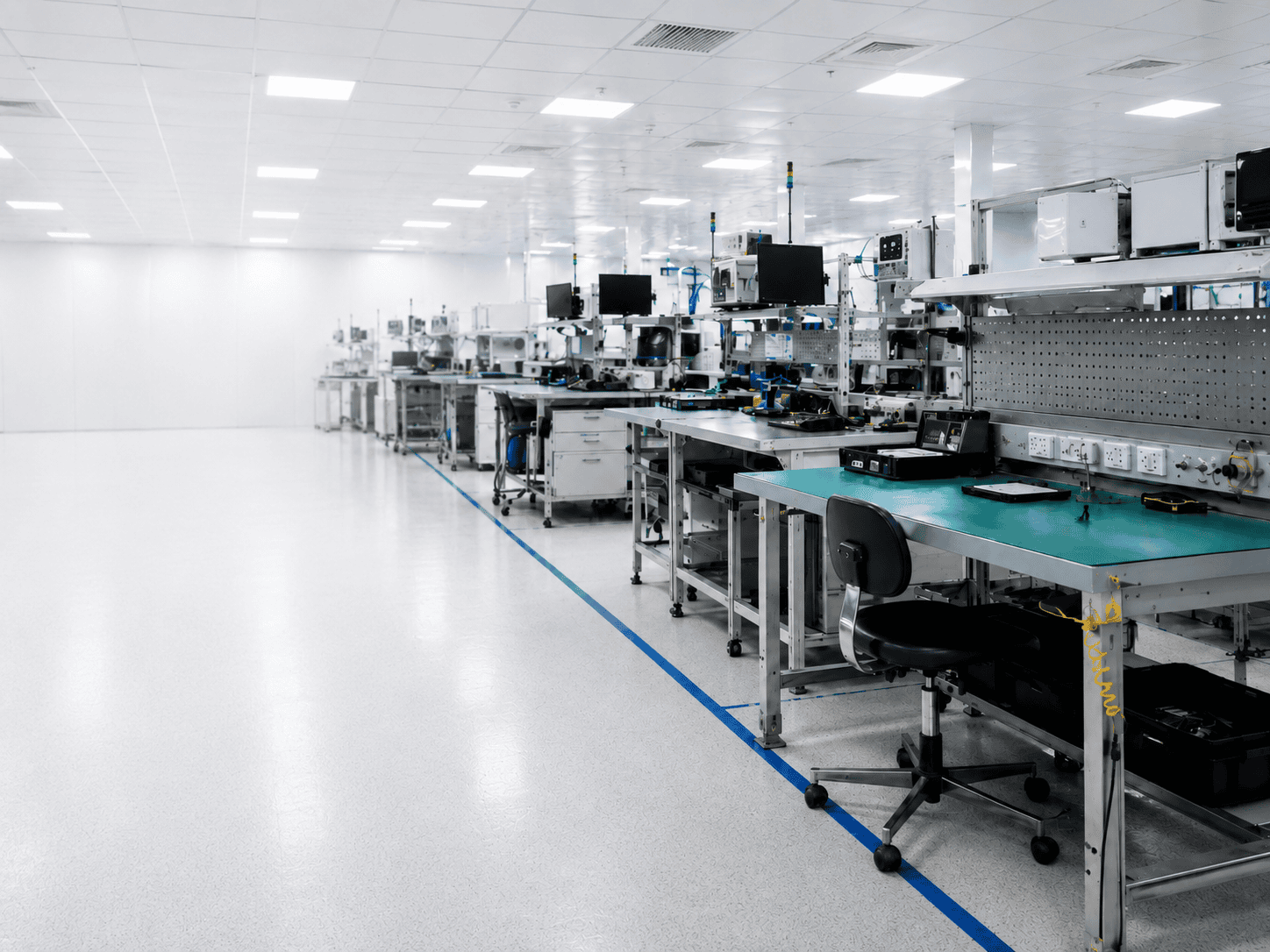
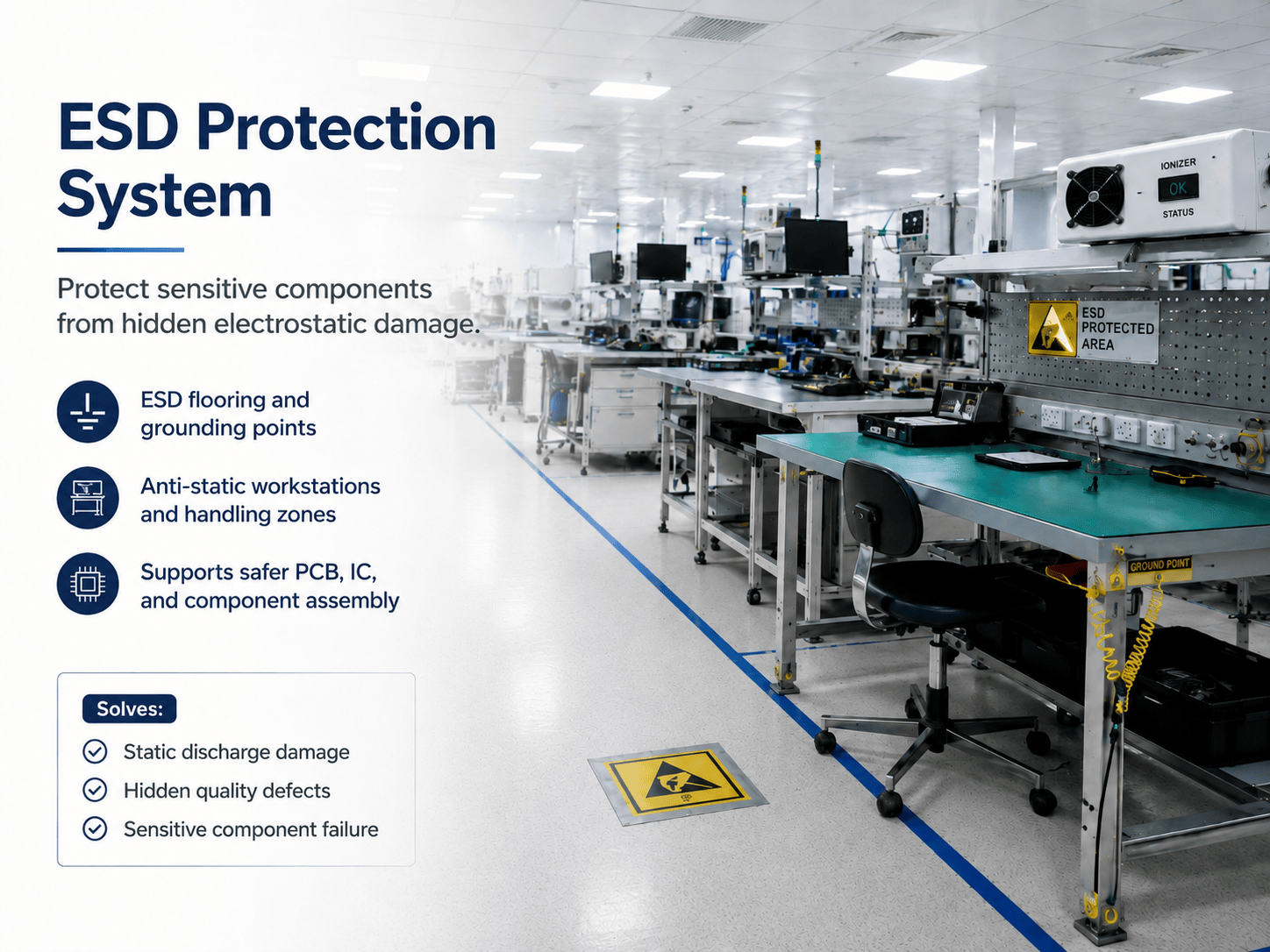
Electronics manufacturing requires strong ESD control. The cleanroom includes ESD-safe flooring, grounding points, anti-static workstations, and controlled handling areas to reduce the risk of hidden component damage caused by electrostatic discharge.
ESD flooring and grounding points
Anti-static workstations
ESD-safe handling zones
Reduced hidden quality defects
3. Temperature & Humidity Control
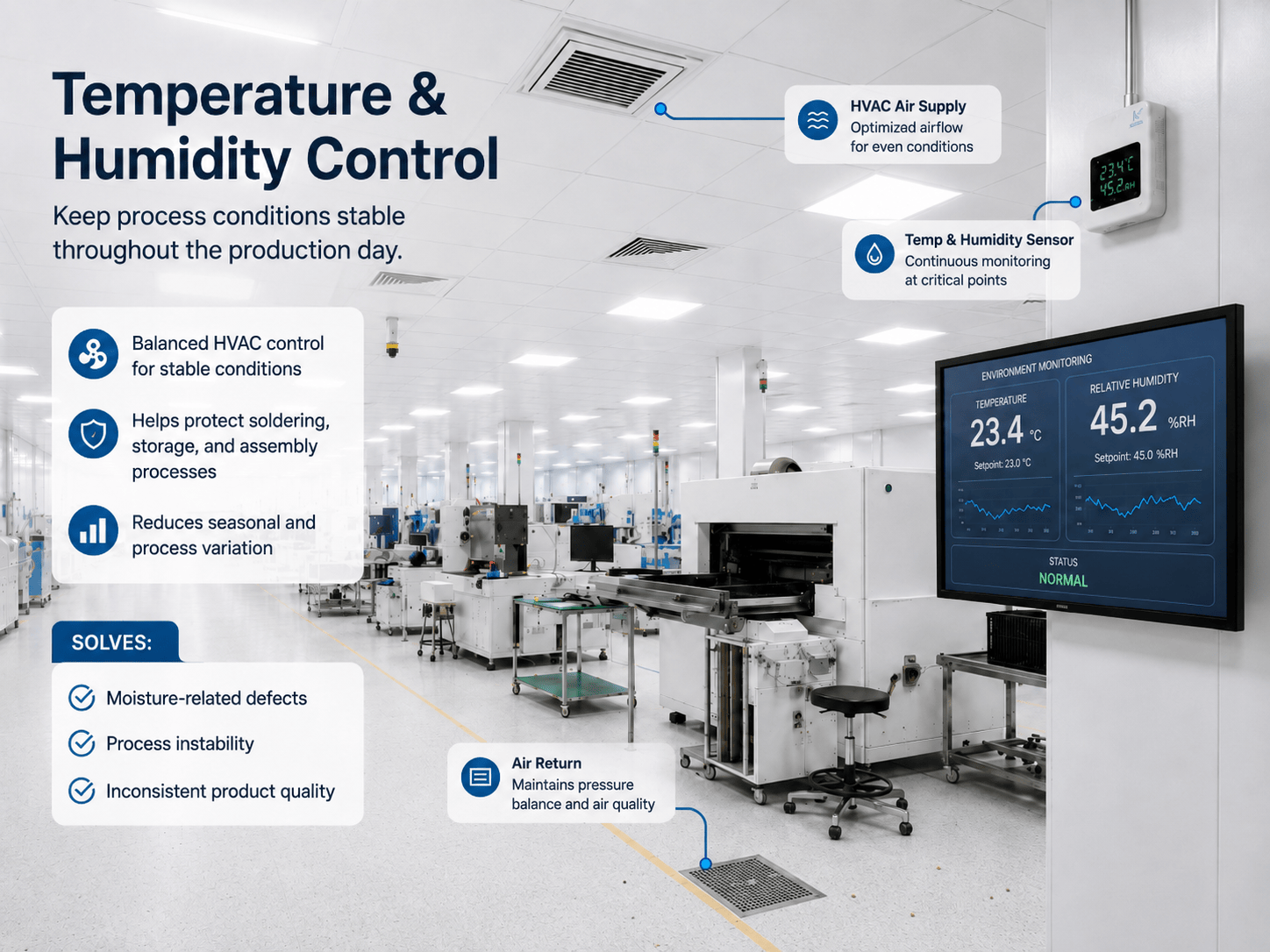
Stable temperature and humidity are important for PCB assembly, SMT production, component storage, testing, and inspection. The cleanroom HVAC system was designed to support more consistent process conditions throughout the production day.
Balanced HVAC control
Humidity control for sensitive materials
Reduced moisture-related defects
Improved process repeatability
4. Pressure Zoning & Contamination Control
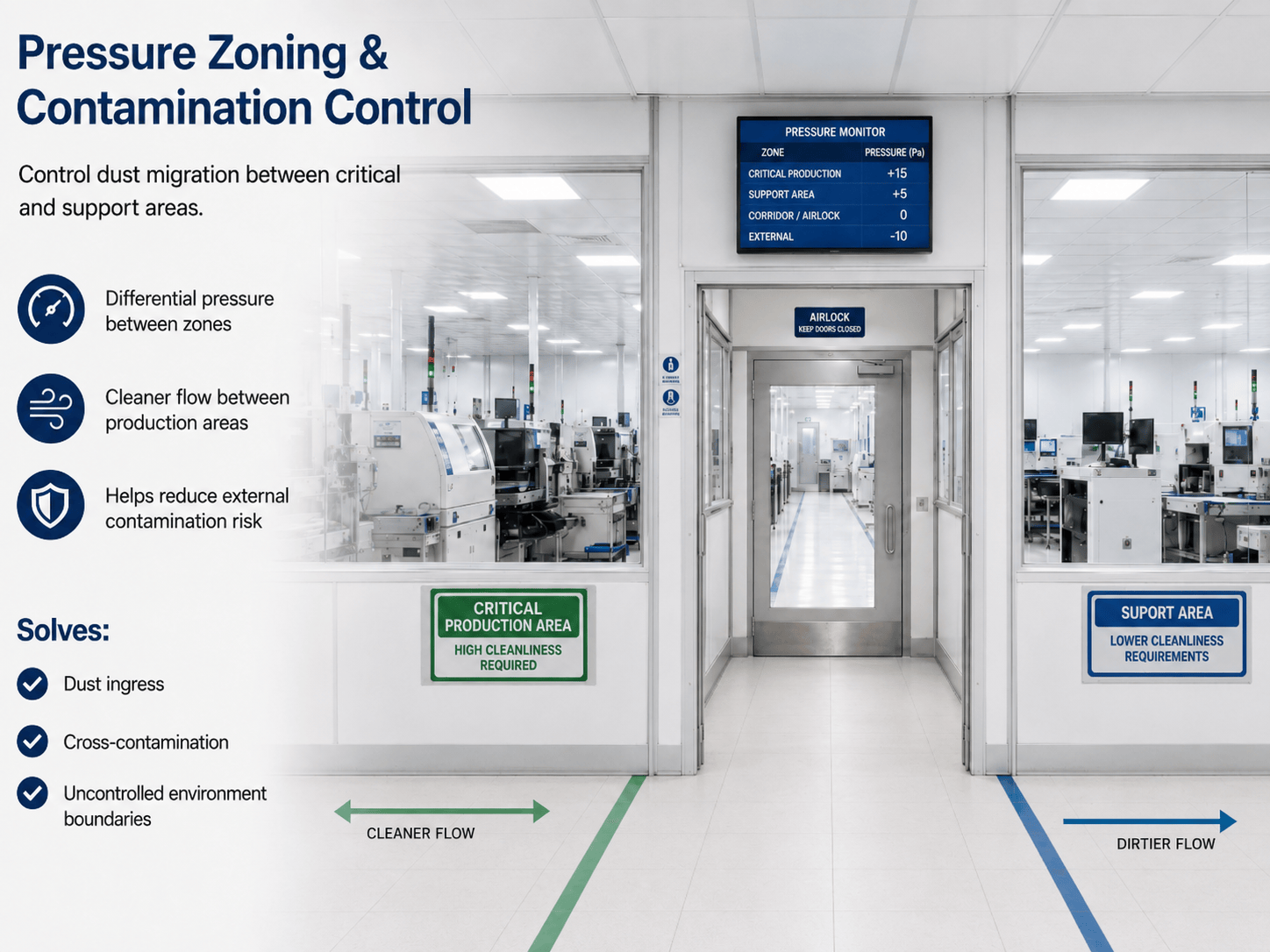
The cleanroom layout uses pressure zoning to separate cleaner production areas from support areas and access zones. This helps reduce dust migration, improve contamination control, and maintain a more stable production environment.
Differential pressure between zones
Cleaner airflow direction
Reduced external contamination risk
Better separation between critical and support areas
5. Air Shower & Personnel Entry
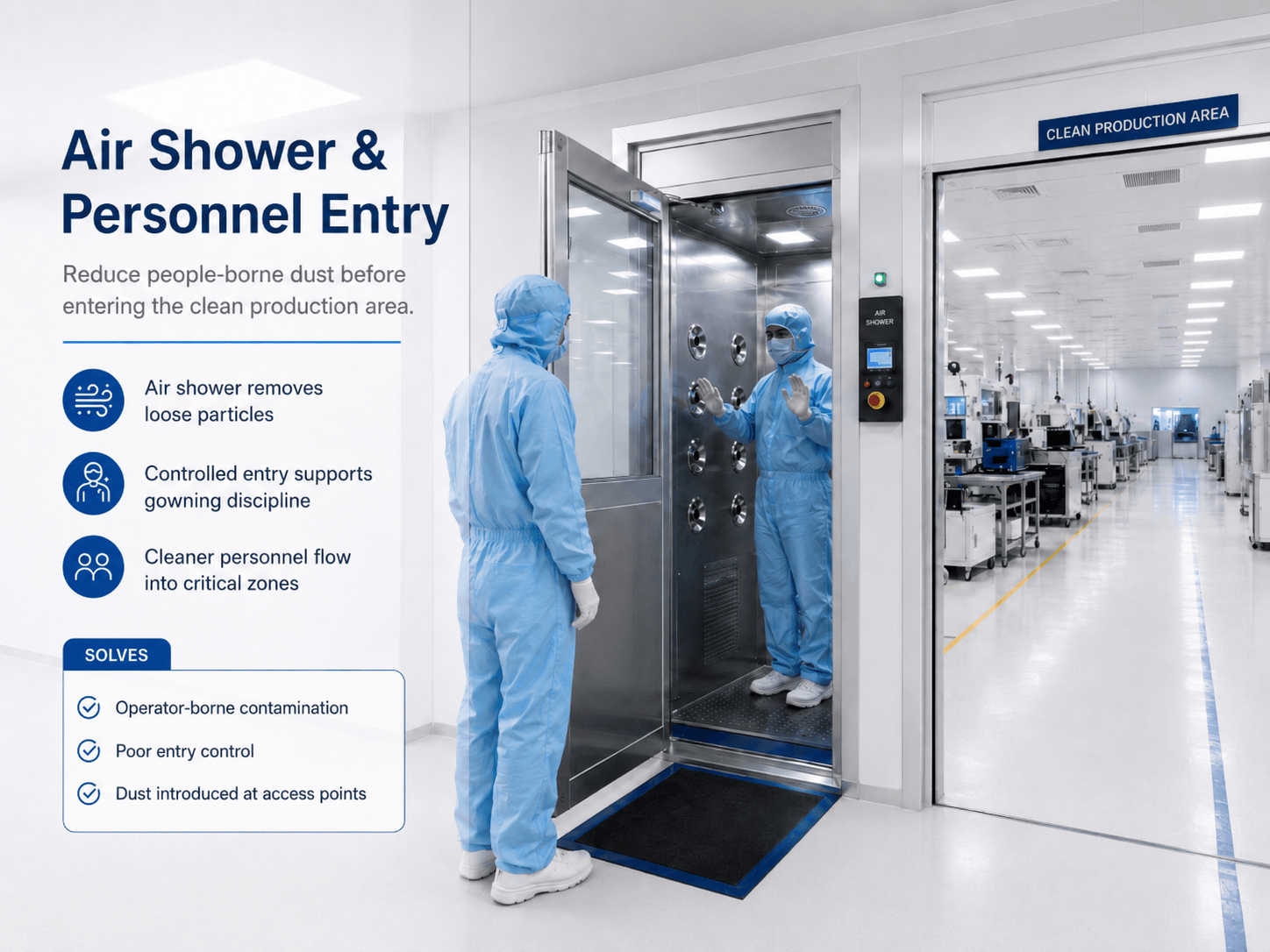
The air shower system helps remove loose particles from personnel before they enter the clean production area. Combined with gowning control and entry planning, it reduces people-borne contamination and improves daily cleanroom discipline.
Personnel entry control
Air shower particle removal
Improved gowning discipline
Cleaner movement into production areas
6. Pass Box & Material Transfer
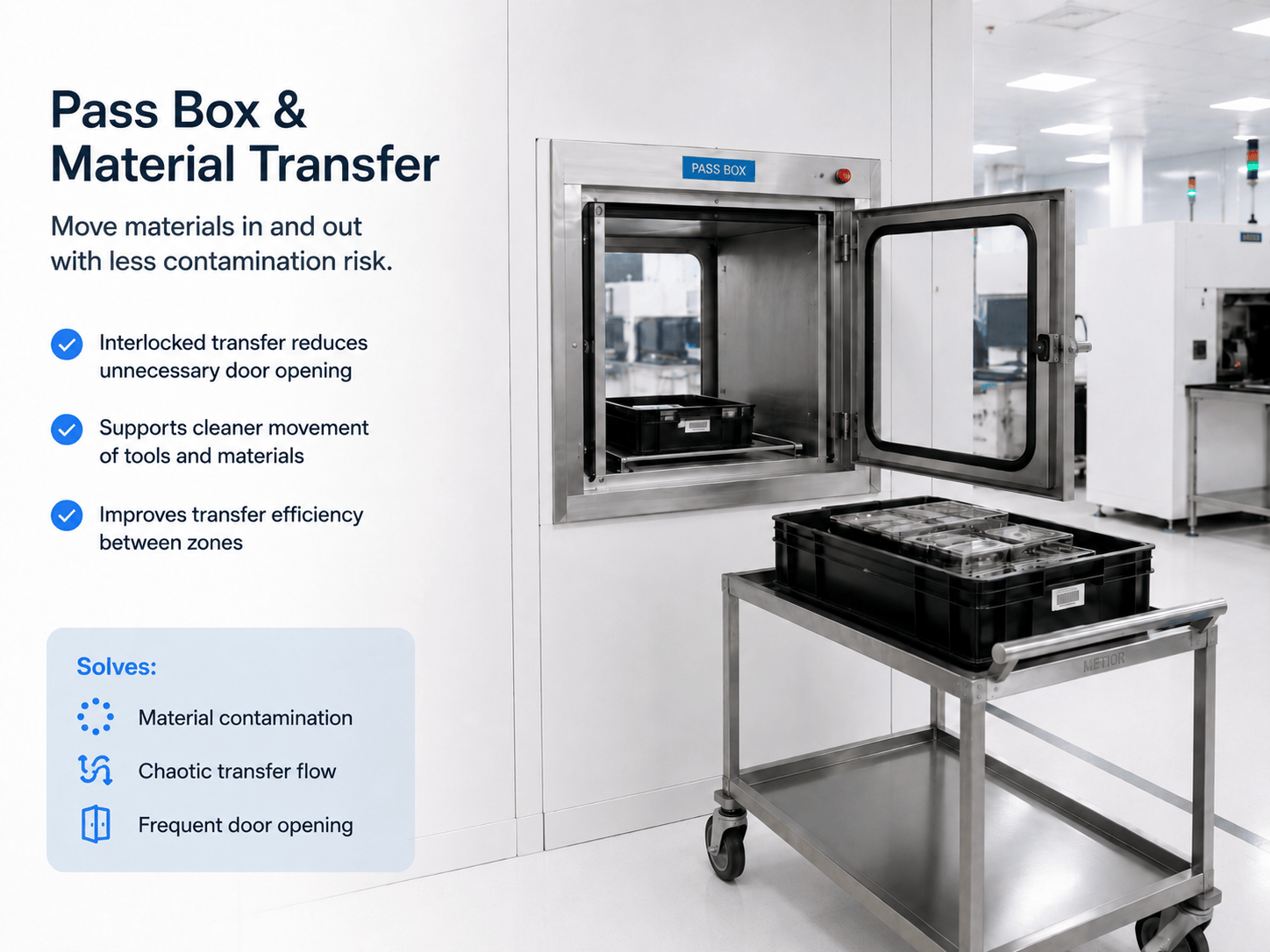
The pass box system allows tools, components, and packaged materials to move between zones with less contamination risk. It reduces unnecessary door opening and helps protect airflow stability in the cleanroom.
Interlocked material transfer
Reduced door opening frequency
Cleaner material movement
Improved transfer efficiency
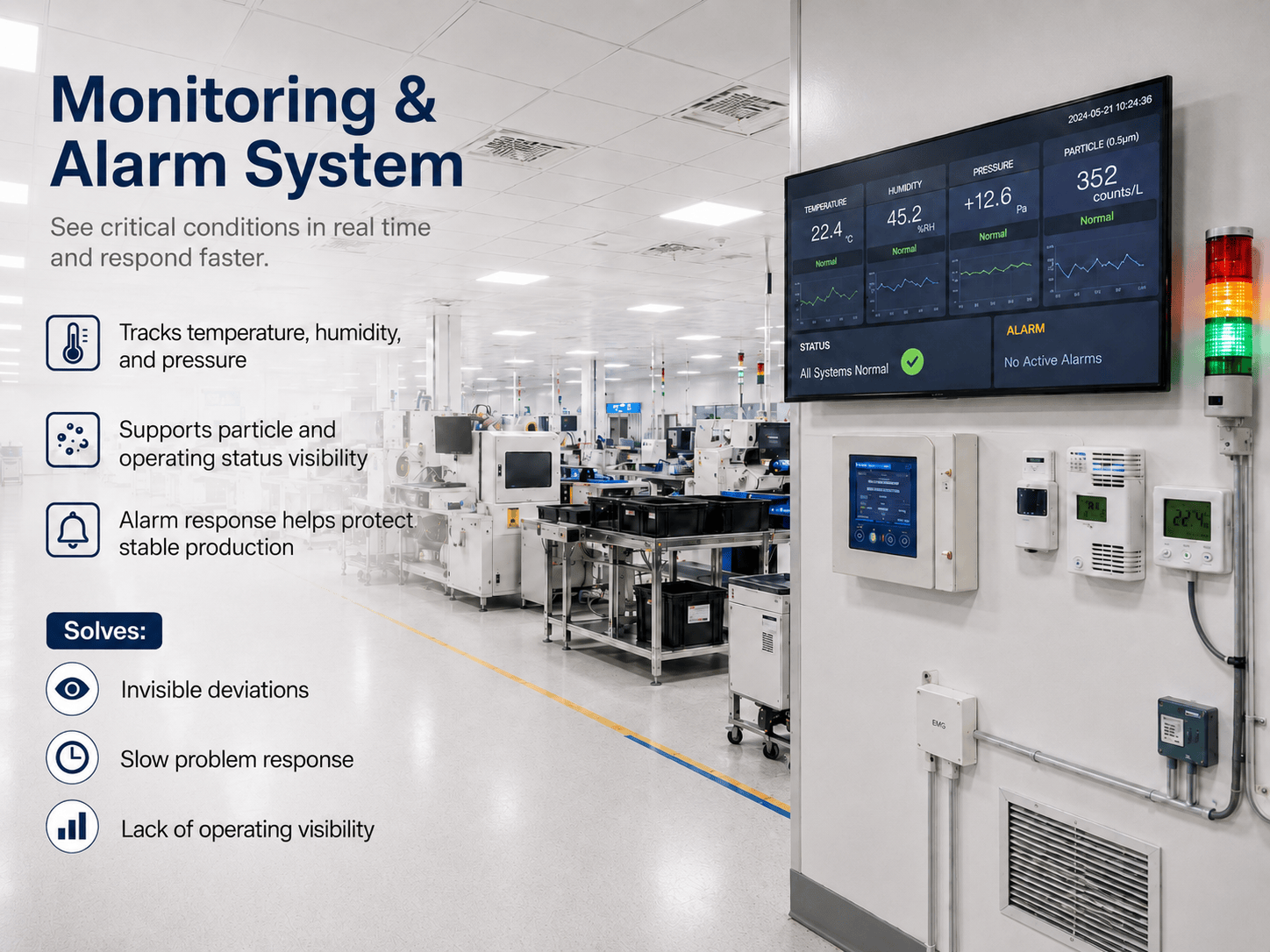
7. Monitoring & Alarm System
The cleanroom includes monitoring devices for key environmental conditions such as temperature, humidity, pressure, and operating status. This gives the client better visibility during daily operation and helps identify environmental deviation earlier.
Temperature monitoring
Humidity monitoring
Differential pressure monitoring
Alarm response for abnormal conditions
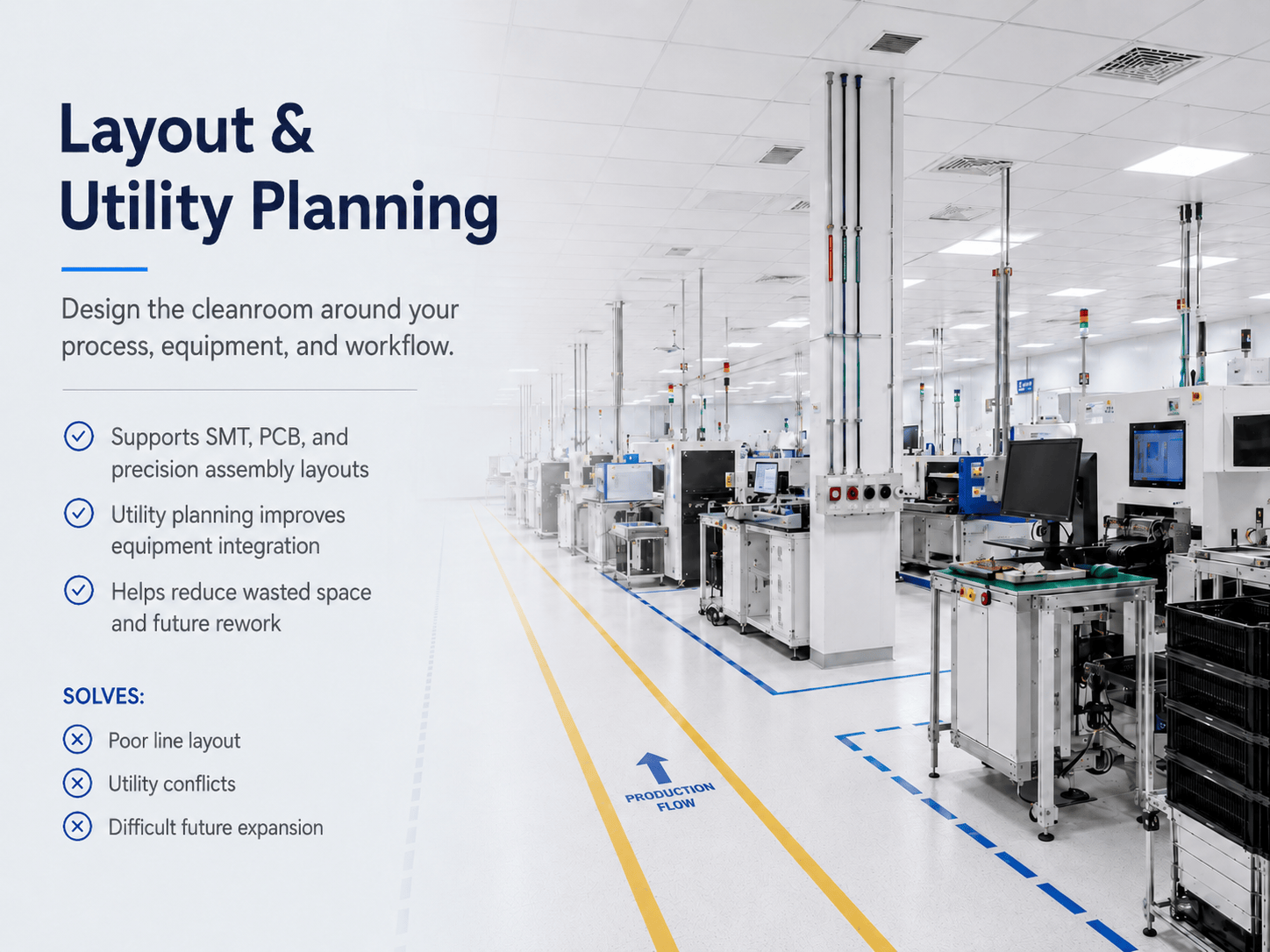
8. Layout & Utility Planning
The cleanroom layout was planned around production equipment, operator workflow, maintenance access, and utility connections. This helps reduce wasted space, avoid utility conflicts, and make the cleanroom easier to operate and maintain.
SMT and PCB production line planning
Equipment utility coordination
Operator and material flow planning
Future expansion consideration
Problems Solved for the Client
| Problem | Cleanroom Solution | Result |
|---|---|---|
| Dust and airborne particles affected product quality | HEPA filtration, stable airflow, cleanroom ceiling system | Cleaner production environment and reduced particle risk |
| Risk of electrostatic damage to sensitive components | ESD flooring, grounding points, anti-static workstations | Better protection for PCB, IC, and precision electronic components |
| Unstable temperature and humidity | HVAC and environmental control system | More stable process conditions and improved production consistency |
| Cross-contamination between different areas | Pressure zoning, air shower, pass box, controlled entry | Improved separation between clean zones and support zones |
| Poor equipment layout and workflow conflicts | Cleanroom layout planning and utility coordination | Better production flow, easier maintenance, and reduced future rework |
Project Result
After completion, the client received a functional electronics cleanroom designed for high-yield production, stable process control, and long-term manufacturing use. The cleanroom supports PCB assembly, SMT production, component testing, and inspection processes while helping reduce contamination, ESD risk, and environmental instability.
The final cleanroom layout provides a cleaner production environment, organized personnel and material flow, visible monitoring conditions, and better support for future production expansion. For electronics manufacturers, this type of cleanroom is not only a controlled space, but also an important part of quality control and production reliability.
Why Choose STJH Cleanroom for Electronics Cleanroom Projects?
Custom cleanroom design based on real production processes
Turnkey cleanroom project support from design to installation
Solutions for PCB, SMT, semiconductor, and precision electronics manufacturing
Integrated HEPA filtration, airflow, HVAC, ESD, pass box, air shower, and monitoring systems
Cleanroom layout planning for equipment, operators, materials, and utilities
Support for ISO 5, ISO 6, ISO 7, and ISO 8 cleanroom requirements
Suitable for both new cleanroom construction and cleanroom upgrade projects
Electronics Cleanroom Applications
PCB assembly cleanroom
SMT production cleanroom
Semiconductor packaging cleanroom
Precision electronics cleanroom
Electronic component testing cleanroom
Sensor manufacturing cleanroom
Optoelectronic product cleanroom
Battery electronics assembly cleanroom
Need an Electronics Cleanroom for Your Production?
If your production process is affected by dust, static electricity, unstable temperature, humidity fluctuation, or poor workflow, an electronics cleanroom can help you create a more controlled and reliable manufacturing environment. STJH Cleanroom can provide layout design, equipment selection, cleanroom materials, installation guidance, and turnkey project support based on your production needs.
Contact us to get a custom electronics cleanroom design, equipment list, and project quotation.